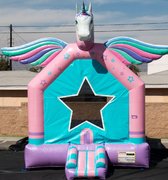
You can tell a good bounce house day from the photos. Kids with flushed cheeks, the quiet moment when the parent with the camera realizes they have half an hour of peace, and the last five minutes when no one wants to leave. Getting there takes more than tapping the first phone number you find. Bounce houses are safe, fun, and straightforward when you ask the right questions up front, and expensive, stressful, and risky when you don’t. I’ve set up hundreds of inflatable rentals across parks, backyards, church lots, and school gyms. The patterns are consistent, and the questions that save the day are practical, not fancy.
What follows is a field-tested checklist of what to ask a local bounce house company before you book. Some details vary by region and season, but the logic holds everywhere.
Start with the event you’re actually hosting
Before you ask a company anything, pin down the basics on your end. A toddler birthday calls for different equipment than a school carnival. If you picture a water slide and bounce house combo for a July backyard party, you’ll need hoses, drainage, and towels. A December gym event looks different: power outlets, door widths, and noise inside a hard-walled space.
Think in terms of age range, headcount, and activity level. If it’s mostly kids under six, choose toddler bounce house rentals with lower walls and soft features. For mixed ages, inflatable obstacle course rentals spread the traffic and avoid pileups. Teenagers gravitate to larger units and competitive designs, often with timed runs or head-to-head lanes. Adults inevitably try at least one run, so plan for that, especially with backyard inflatables that sit close to fences or patios. The more precise you are about attendees and space, the easier it is for the company to recommend the right inventory.
Liability and safety aren’t paperwork afterthoughts
Ask how the company manages risk. Not because you plan to litigate, but because honest operators are proud of their safety practices, and vague answers are a red flag. The best ones talk about inspections, anchors, and supervision before they talk about colors and themes.
There are three safety anchors that matter: proof of insurance, inspection and maintenance records, and set-up competency. Request a certificate of insurance that lists at least $1 million in liability coverage, which is typical in the industry. Parks and schools sometimes require to be named as additional insured, a small administrative step that separates professionals from hobbyists. Ask how often their inflatable party equipment is inspected and cleaned. Monthly checks are common during peak season, with deeper inspections off-season. You want to hear specifics such as seam checks, blower testing, and patch logs.
Then ask who sets it up. Good companies send trained techs who know how to read the site, not just a driver who drops a bag and a blower. If you hear terms like continuous airflow, rated stake depth, or sandbag equivalence for pavement, you’re in good hands. If a rep says, “It usually works out,” keep looking.
Sizing the inflatable to your space and electrical reality
The most common mistake is choosing a unit that doesn’t fit or overloading your home’s circuits. You need exact dimensions for the inflatable bounce house footprint, including the blower clearance and safe buffer, not just the pretty footprint dimensions on the brochure. A standard 13 by 13 bounce house often needs a 15 by 15 surface to leave room for tethers and entry, and ceiling clearance matters indoors. Gym rafters can be deceptive. Always ask for the total height and width including tie-down angles, and compare with door and gate openings. I’ve watched a delivery team deflate an entire unit on a driveway because the side yard gate was one inch too narrow.
Electricity is the other constraint. Most jumper rentals rely on 1 to 2 blowers, each pulling around 8 to 12 amps at start-up and a bit less continuous. A combo unit or inflatable obstacle course can need 2 or 3 blowers. If the company says it all runs off “a normal outlet,” that’s technically true, but you want separate dedicated circuits so you aren’t tripping breakers when the fridge compressor kicks on. Ask how many blowers, how many circuits, and what the start-up draw is. If your panel is older or partially loaded with kitchen or HVAC, consider a generator through the rental company. Their units are sized for the draw and include fuel. For park events, a generator is often mandatory.
Surface and anchoring follow the same logic. Grass is ideal for stakes. Pavement requires water barrels or sandbags. Ask specifically how they anchor on your surface, what the minimum stake depth is, and how many anchor points they use. Twelve-inch steel stakes at every point beat a couple of garden spikes. On patios or rooftops, ask about protective tarps and weight limits. A local technician will know if your area’s afternoon winds pick up, which affects anchoring and supervision.
Weather plans that work in the real world
Wind, rain, and heat each change the equation. Companies should have straightforward cutoffs and contingency options. A common rule is to cancel or deflate at sustained winds above 15 to 20 mph. That isn’t overcautious. The physics of a big inflatable catching wind is unforgiving. Ask whether they provide wind stakes with flags or if they use a handheld anemometer during set-up. In my experience, a team that measures wind also respects shutdown decisions when gusts climb.
Light rain is usually fine for dry units, but slippery vinyl changes play behavior. The water slide and bounce house combo is designed for wet use, yet cold fronts turn “fun” into “teeth-chattering.” Ask about rain checks and rescheduling windows. Many local bounce house companies will let you reschedule once without penalty if winds or storms threaten. Clarify whether refunds or credits apply and when the final weather call happens. Early morning radar looks different than noon gusts.
Heat matters too. Dark vinyl gets hot. For midsummer parties, ask if the unit has a sunshade or if lighter colors are available. Water https://www.sandiegokidspartyrentals.com/category/carnival-games/ hose placement matters, not only for fun but to keep seams from overheating on scorching days. If your yard gets full afternoon sun, plan for shade pop-ups or shift the schedule earlier, then invite kids back to the deck for popsicles when the vinyl needs a cool-down.
Hygiene and cleaning routines that pass the sniff test
Parents can smell a lazy cleaning routine. Good operators sanitize between every rental. Ask what products they use and how long the disinfectant sits before wipe-down. Look for non-bleach, child-safe cleaners that still kill common viruses and bacteria. If you’re booking toddler bounce house rentals, emphasize shoe policies. Toddlers put everything in their mouths. Shoes off is the bare minimum. I’ve seen companies bring a small, clean mat for the entry to keep grass clippings out, which helps both hygiene and maintenance.
Anecdotally, the cleanest units arrive with a slight citrus or neutral cleaner scent, not heavy perfume. If a unit shows up damp, ask when it was last used. A unit packed wet after a late event can breed mildew. A reputable team will refuse to deploy a damp, musty inflatable and will substitute another if necessary. Don’t be shy about asking to unzip a rear panel and take a quick look. You are paying for safe fun, not the mystery bag from last night’s carnival.
Capacity, supervision, and rules that prevent pileups
Bounce houses look forgiving, but most injuries come from overcrowding and mixed-age collisions. Ask for capacity by age and weight, not just a total number. A typical 13 by 13 unit holds 6 to 8 younger kids at a time or 4 to 6 mixed-age kids. Teens should go in smaller groups. Combos with slides and obstacles change flow patterns. Many companies provide a laminated rule sheet and recommend a designated adult monitor. That person’s job is simple: keep numbers in range, group by size when practical, and pause entry when kids get too wild. Rotations every 3 to 5 minutes keep lines moving and cut down on chaos.
If you are planning kids party rentals for a school or community event, ask about staffing. Some companies offer trained attendants for an hourly fee. For multi-station set-ups, attendants are worth it. They watch the weather, manage lines, and coordinate with the lead on breaks or equipment adjustments. For a backyard birthday party bounce house with 15 kids, a single adult with a clear voice and a whistle usually does the trick.
Themes and features that match your crowd
Plenty of options exist, but not every feature is a good fit for every group. Basketball hoops inside a unit are fun, but balls become projectiles when a toddler wanders in. Obstacle courses solve overcrowding and are excellent for mixed-age groups because the motion goes one direction, not a free-for-all. A typical 30-foot obstacle course can cycle 120 kids per hour with quick resets. Larger 60-foot courses work for festivals with space and staffing.
Combos that include a slide add appeal and natural rotations. Kids bounce for a minute, slide out, then line up again. The water slide and bounce house combo is a summer favorite, but be ready for splash zones and grass erosion. Put it over a sturdy tarp with a slight downhill flow away from patios. Ask about drip liners and check where the blower sits, because a puddle near the blower is a tripping hazard and electrical risk.
For toddlers, choose low-profile, bright units with gentle slopes and plenty of mesh visibility for parents. Toddler-specific designs often include soft pop-ups and climb-throughs that won’t clobber a 3-year-old. Avoid steep slides. Ask whether the company can bring foam blocks or soft mats near the entry, which helps with shoes-off transitions.
Delivery windows, set-up time, and the reality of driveways and gates
Good companies give honest delivery windows, not wishful thinking. Expect a 30 to 90-minute window for both delivery and pickup, especially on busy Saturdays. Ask how long set-up takes. A standard jumper rental usually goes up in 15 to 25 minutes once the crew is on site. A larger inflatable obstacle course or multiple units can take 45 to 90 minutes. Build buffer into your party start time. I like the unit set and tested at least 30 minutes before kids arrive, so the crew can troubleshoot a breaker or adjust anchoring without an audience.
Talk through access: street parking, tight gates, and pets. Provide gate width in inches. If the path includes steps, tell them exactly how many and how steep. Crews use dollies and want to protect both their backs and your landscaping. Move cars if the driveway is the easiest route. If you’re renting multiple units for event inflatable rentals, ask whether they’re sending more than one truck to meet your start time.
Transparent pricing and the fees people forget
The rental price on the website is not the full story. Ask what the rate includes: delivery within a certain radius, set-up, breakdown, and a standard rental duration. Many companies quote 4 to 6 hours, but are flexible on drop-off and pick-up if schedules allow. Clarify overtime rates and overnight policies. Overnight can be a great value if the company is comfortable with the neighborhood and security, but you should understand liability for overnight damage or weather.
Expect surcharges for parks, stairs, sand setups, or areas beyond the normal service radius. Generator rentals add cost and require fuel planning. Water units can add set-up time charges. Cleaning fees are rare unless the unit returns in bad shape. Make sure you know the rules around silly string, confetti, and face paint. Silly string fuses into vinyl and can permanently damage it. If your event uses these, coordinate with the company in advance or expect significant cleaning charges.
Deposits and cancellations come next. A 20 to 50 percent deposit is common to hold the date. Ask how far in advance you can cancel for a full refund, and what the weather policies allow. The best operators write policies that protect both parties, then handle edge cases with common sense. If a thunderstorm cancels the second half of a school carnival, credits toward the next event often resolve the issue.
Insurance and permitting at parks and public spaces
If you’re planning at a park, you’ll deal with permits. Many cities require an inflatable permit and proof of insurance that names the municipality. Some parks restrict staked installations to protect irrigation lines. Others require the vendor to be on an approved list. Start two to three weeks ahead to secure your park permit. Ask your vendor for the exact insurance documents the park requires. They’ll often have templates on file.
Power is always the challenge at parks. If there is a pavilion with outlets, don’t assume they work or can handle the load. A small generator runs a single blower, but larger set-ups need higher capacity. Your local bounce house company can size the generator, and the cost is small compared to the headache of losing power mid-event. Keep curious hands away from fuel and cords. Ask the vendor to stake or tape down cables and to position the generator away from the crowd without violating park rules.
Vetting a local bounce house company without detective work
You can tell a lot from the first phone call. Do they ask about your surface, access, age ranges, and power? Do they send written quotes with line items and policies? Photos on the site help, but candid reviews mention delivery professionalism, responsiveness on pickup, and the condition of the inflatables. If you see praise for on-time arrival and clean units across multiple reviews, that’s a good sign.
Some operators are seasonal and part-time. That isn’t inherently bad. A teacher who runs kids party rentals on weekends can be meticulous. What matters is process. Do they confirm the day before, provide a text with the driver’s ETA, and call you if they hit traffic? Good teams act like a service, not just a drop-off. You should feel like they’ve done this a hundred times and still care about getting yours right.
The quick-hit questions worth asking on the call
Use this brief list to guide your first conversation. Keep it conversational so you learn how the company thinks, not just what they say.
- Are you insured, and can you send a certificate naming my venue if needed? What are the exact dimensions, required clearance, and anchoring method for this unit? How many blowers and circuits will it need, and do you recommend a generator for my setup? What’s your weather policy for wind and rain, and when do we make the final go/no-go call? How do you clean and sanitize between rentals, and what are your shoe and food rules?
Matching units to events: practical scenarios
Two examples help illustrate how the right questions lead to the right equipment.
For a backyard tenth birthday with 18 kids, half of them energetic and a few younger siblings, a 13 by 13 bounce house will bottleneck. A better fit is a 30-foot inflatable obstacle course that moves kids through in pairs. Ask for cones to mark the line. If the yard is narrow, consider a compact combo with a single-lane slide and enforce rotations. Confirm two blowers and two circuits or add a generator. Put the entry where parents can see it from the patio. Check gate width 36 inches minimum for most dollies.
For a summer block party with mixed ages and hot weather, a water slide and bounce house combo plus a standalone slip-and-slide style unit spreads the crowd. The combo keeps younger kids close to parents. The slide satisfies teens and adults. Ask the company to run separate hoses with shutoffs so you can control flow and avoid turning your lawn into a marsh. Confirm tarps and drainage direction. Establish a shoe caddy and towel station near the water units. For noise, position blowers away from the DJ and seating.
Supervision that keeps fun from becoming frantic
Every incident I’ve seen that required ice or a bandage had the same ingredients: too many kids inside, mixed sizes, and no gatekeeper. Assign an adult monitor hour by hour. Rotate so no one gets stuck on the whistle all afternoon. Teach them the quick rules: shoes off, pockets empty, no flips unless the unit is rated and the group is old enough, and no climbing the netting. With obstacle courses, enforce one-at-a-time per lane, with a three-second buffer to prevent pileups at the slide exit. If the wind kicks up, the monitor deflates the unit or halts play and calls the vendor if unsure.
Post-event pickup and the little things that help
Leave a clear path for the crew to roll the unit out. If you moved patio furniture to make space, keep it out of the way until the unit is gone. Switch off sprinklers the night before and the night after to keep the area dry for the equipment and prevent mud in your lawn’s seams. If you noticed anything during the party a slow blower, a loose strap tell the crew. They’ll note it for maintenance.
Tipping is optional. If the crew was early, helpful, and worked hard on a hot day, a tip or cold water is appreciated. A good review with specifics about reliability and cleanliness is gold for local operators. It also helps future hosts choose wisely.
When to consider extras and when to skip them
Add-ons can be worthwhile. A small cotton candy machine turns downtime into a treat line. Concessions require a dedicated table, a power outlet, and an adult to operate. Foam cannons and snow machines look amazing in marketing videos and are delightful in the right setting, but they add moisture and slip risk. For most backyard events, one centerpiece inflatable is better than three smaller distractions. If budget is tight, choose one high-quality unit over two tired ones.
Some extras are quiet safety wins. Ground tarps protect both the lawn and the vinyl. Entrance mats keep grass out. Weighted door stops help with indoor events, making it easy for kids to pass without pinched fingers. Ask the company what they can provide that reduces friction rather than just adding spectacle.
A final word on value and peace of mind
You can find a bargain and still get quality if you ask the right questions, but the cheapest listing is rarely the best deal once you factor in reliability, cleaning, and safety. A trustworthy local bounce house company treats your event like their reputation rides on it. In a small market, it usually does. Look for clarity over hype, specifics over slogans, and a willingness to say no when conditions aren’t safe.
Take five minutes with this checklist, have the conversation, and you’ll feel the difference on party day. The truck pulls up, the crew knows exactly where to go, the blower hums, and you watch your timeline, not their problems. Kids line up for turns, parents chat, and you get to be present. That’s the real promise of bouncy castle rentals done right. You’re not buying vinyl and air. You’re buying a couple of hours where the fun runs itself.